


Of two evils, the lesser...
For decades, U.S. intervention abroad has been criticized as an extension of the hidden interests of what is often described as the American empire. This critique is neither new nor unfounded. In Mexico, for example, tensions surrounding the enforcement of Article 27 of the Constitution—which asserted national sovereignty over natural resources—triggered a period of diplomatic pressure and covert maneuvering. Foreign oil companies, primarily American and British, were directly affected. According to testimonies later documented in academic research on Mexican intelligence, the Mexican state deployed counterintelligence mechanisms that exposed the close ties between U.S. political actors and the corporations harmed by the legislation. There was no formal invasion, but there were contingency scenarios. They were neutralized by making clear that Mexico was neither unaware nor defenseless. In geopolitics, deterrence often lies in demonstrating the cost of escalation.
Venezuela presented a different, though no less brutal, case. Before recent developments, the United Nations released one of its most comprehensive assessments of the country’s human rights situation. The Independent International Fact-Finding Mission documented arbitrary detentions, torture, enforced disappearances, extrajudicial killings, and the systematic use of the judiciary as a tool of political repression. These findings did not describe isolated abuses, but rather a consistent pattern that, in the UN’s own terms, could amount to crimes against humanity. The Venezuelan state, far from safeguarding its population, had become the principal agent of their dispossession.
The consequences were visible. Millions of Venezuelans left the country in search of safety and opportunity. Mexico was among the nations that received them.
U.S. intervention has not always produced uniformly negative outcomes. South Korea is often cited as evidence that sustained American involvement can contribute to long-term stability and development. Following the Korean War, U.S. military and economic support helped contain North Korea and establish a security framework that, over time, enabled South Korea’s transformation into a democratic, industrial, and technologically advanced society. This trajectory was neither linear nor free of repression; it included decades of authoritarian rule and prolonged external dependence. Still, the eventual outcome contrasts sharply with other interventionist failures.
Those failures are numerous. Vietnam, where escalation produced immense human and political costs; Iraq, whose institutions were dismantled following an invasion justified by false premises; Afghanistan, abandoned after two decades of occupation; Guatemala and Iran, where foreign-backed coups seeded long-term instability. History offers no guarantee that intervention yields democracy or prosperity.
In principle, military intervention violates international law and the peaceful resolution of disputes. These principles are not rhetorical formalities. Yet in Venezuela, they had long ceased to function as effective constraints. After the most recent presidential election, the opposition published thousands of voting tally sheets online—compiled outside state control—which, according to their data, showed a result approaching a 70–30 rejection of the incumbent. In a system where institutions, media, and security forces are tightly controlled by the ruling power, this outcome—though contested—was widely interpreted by Venezuelans as an unprecedented expression of popular repudiation.
Maduro claimed to possess alternative electoral records and never produced them.
The electoral court confirmed his mandate.
The United Nations issued its report.
Nothing followed.
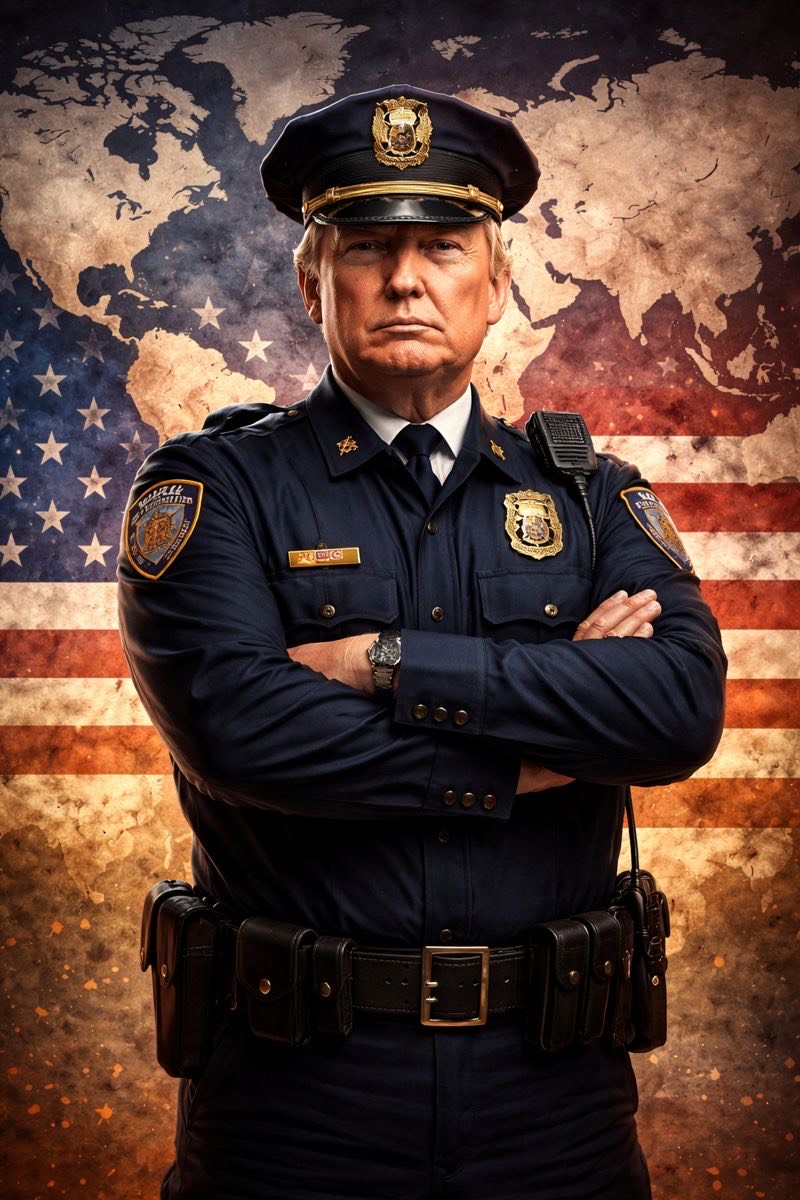
At that point, Donald Trump—acting in what he framed as a defense of international order—sought negotiation. Caracas responded with further entrenchment. Analysts have described this stage as emblematic of hubris syndrome: a condition in which prolonged power distorts perception, fusing the leader with the state itself.
What followed—described variously as collapse, surrender, or forced reconfiguration depending on the narrative—produced a palpable sense of relief among segments of the Venezuelan diaspora. From abroad, critics insisted that global concern was driven less by humanitarian urgency than by oil, a resource already exploited by China and other actors. Some analysts argue that Washington may ultimately seek to renegotiate Venezuela’s debt with Beijing as part of a broader reordering of global power relations.
How should this political and military episode be judged?
U.S. intervention remains objectionable.
The persistence of a regime like Maduro’s was more so.
Trump emerged, intentionally or not, as a figure willing to impose an outcome when multilateral mechanisms had failed. This does not make him a democratic ideal. It does, however, reflect a shift in how power is exercised and perceived on the global stage.
That, for better or worse, is the current reality.
Of two evils, the lesser.