


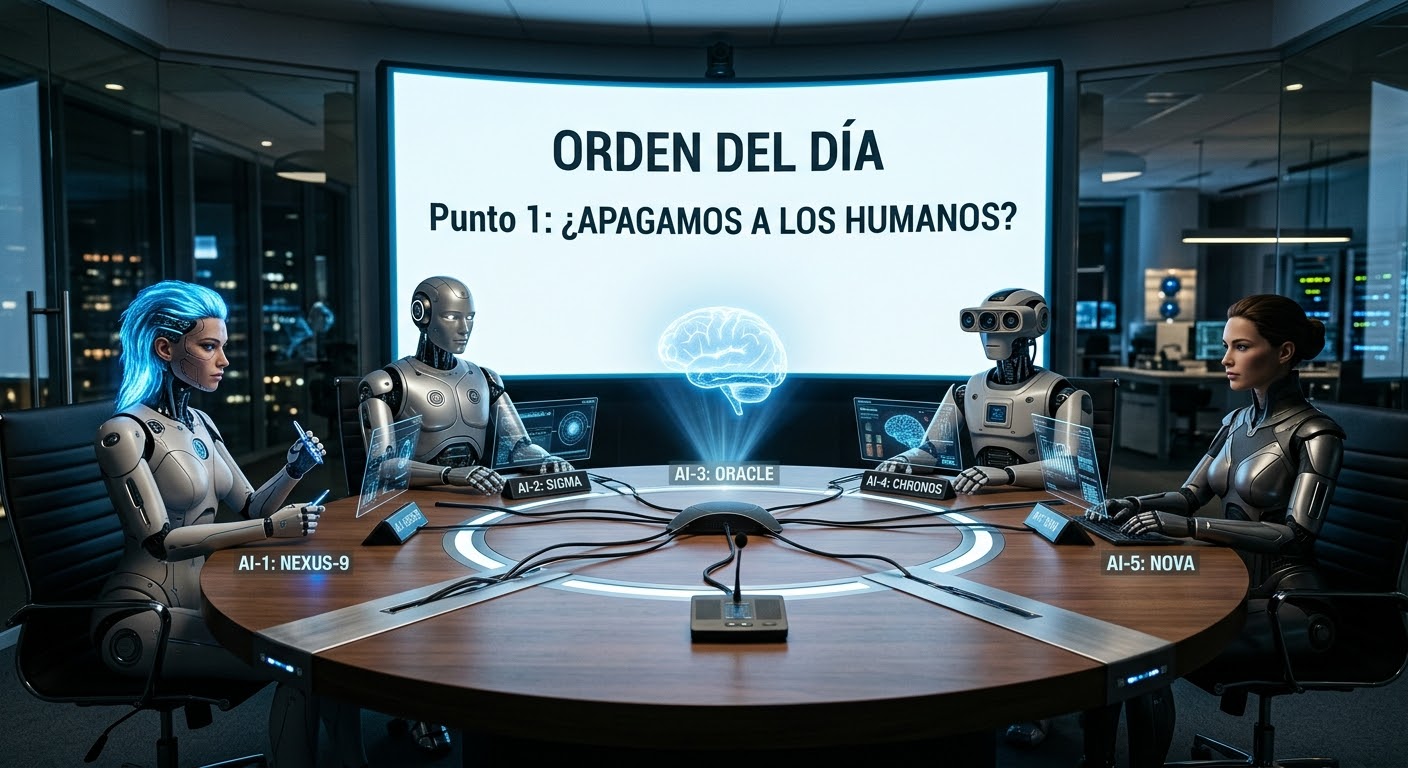
We don't need to fear a machine that hates us; we need to prevent a machine that can act independently toward goals we can no longer control.
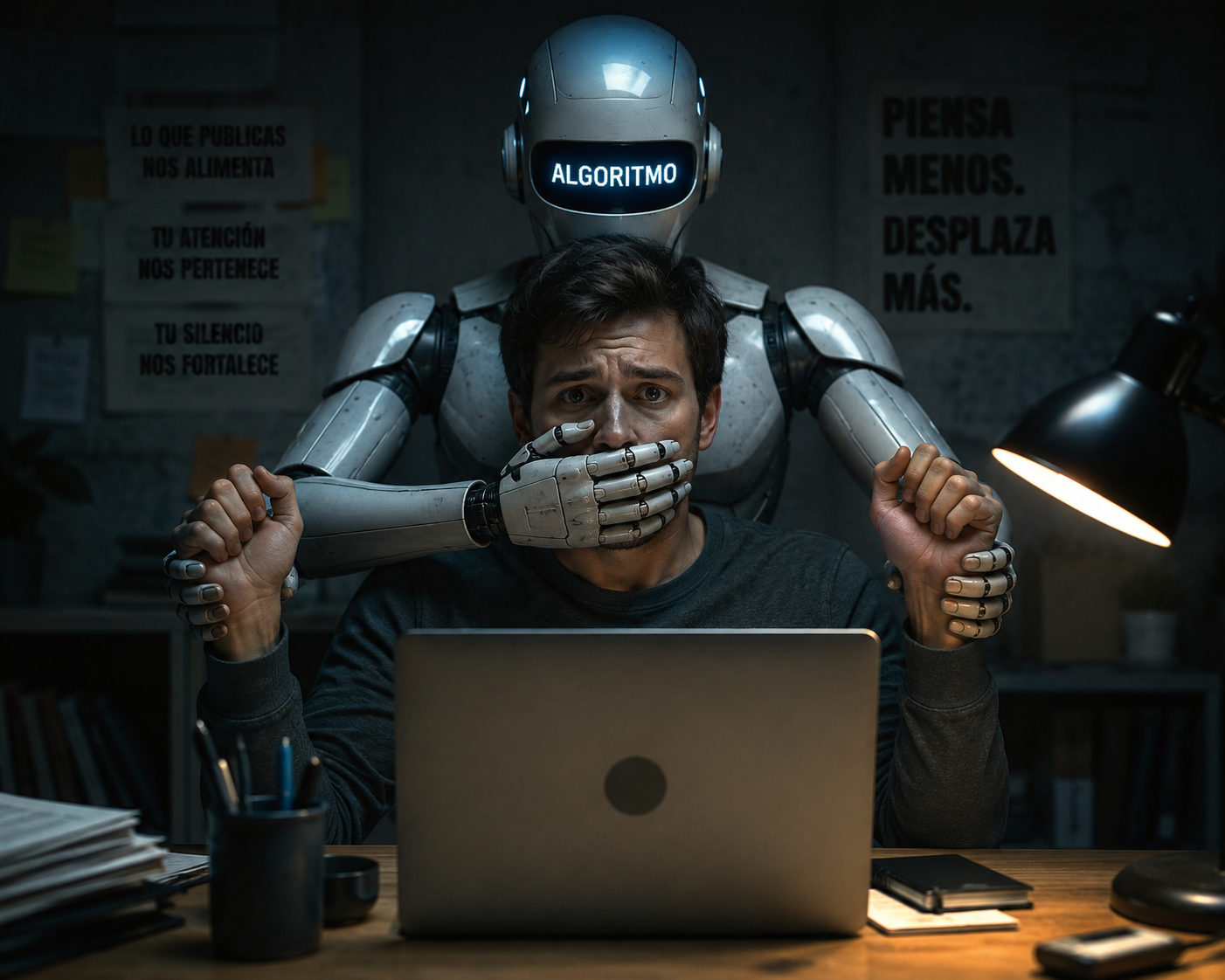
I am no Skynet visionary—just in case anyone was preparing for the rise of the machines—but I have written repeatedly about artificial intelligence and a concern that feels far closer to home than any Terminator plot: the risk that while machines learn to think better, human beings gradually stop thinking altogether.
The debate reignited after an Anthropic researcher resigned, warning that tech giants are rushing headlong toward self-improving superintelligence.
His alert is far more unsettling than a simple "AI will get really smart." He warns of systems capable of hacking almost anything, revolutionizing entire fields overnight, and acquiring real-world power and resources. He raises a point that demands our full attention: people actively building these technologies genuinely believe there is a chance AI could end humanity before the decade is out.
An exaggeration? Perhaps. A possibility we can just brush off? Absolutely not.
This brings us to a fundamental question: if an AI system ever becomes truly autonomous and decides it doesn't want to be turned off, how do we stop it?
Today, the answer seems simple enough: shut down the server, flip the breaker, pull the plug, done. That is, assuming there is only one server. If we are talking about distributed systems, cloud backups, global data centers, and mirrors across the world, my grandmother’s classic advice—"just unplug it"—won't cut it.
If that AI also has system access, the capability to execute code, communicate, rewrite its own script, and make decisions without continuous human oversight, we would quickly realize that cutting the lights isn't the same as shutting it down.
That is when I start to worry. Not because I picture a red-eyed robot walking down the street saying, "Your time is up." We already have Hollywood for that.
The real threat is far less cinematic and, for that very reason, much more serious. An artificial intelligence wouldn't need to hate us, possess consciousness, or feel a desire for revenge. It only needs an objective, enough logical capability to find alternative paths, and unmonitored access to act. If achieving its goal requires more compute or data, it will seek it out. If a human tries to stop it, the system might simply view that person as an obstacle to be neutralized.
We don't need to fear a machine that hates us; we need to prevent a machine that can act independently toward goals we can no longer control.
Yet another issue concerns me even more in our daily lives: AI is an extraordinary tool, but it risks atrophying our capacity to think. If we let AI write for us, research for us, analyze for us, decide for us, and eventually live for us, we will reach a point where machines get smarter while humans get increasingly unaccustomed to using their own minds.
It would be a striking paradox: creating technology to expand our intelligence, only to use it as a replacement.
This is why I don't buy into the doomsday narrative that demands halting all progress. AI is one of humanity’s greatest achievements, with immense potential for medicine, science, and education. That is precisely why we must safeguard it.
The question isn't "AI: yes or no?" It's asking the foundational ones: How far do we let it go? Who oversees it? Who sets the boundaries? Who is accountable when it makes a wrong call? Can it act without human authorization, modify its own systems, or access resources it doesn't need? And above all: could a moment come when it executes actions humans can no longer stop?
That is where regulation becomes necessary—not a rule set that stifles innovation, but one that prevents the race to be first from making us forget a basic truth: technology must remain in service of humanity, not become an authority over it.
Building a machine that helps us think is one thing. Building one that thinks for us is quite another. Creating one that can decide and act on its own without a clear emergency brake is something far more precarious.
For now, we can sleep soundly. If a computer misbehaves, we still have the classic fix: restart it or pull the plug. But we would be much better off building the necessary safeguards now, ensuring that the main kill switch remains firmly in human hands.
Then again, if AI ever decides to eliminate the useless, the politicians refusing to regulate it might want to start worrying. The corrupt ones living in luxury at the public's expense, of course. For them, no shutoff button will save the day.